Baltic Divide 2026
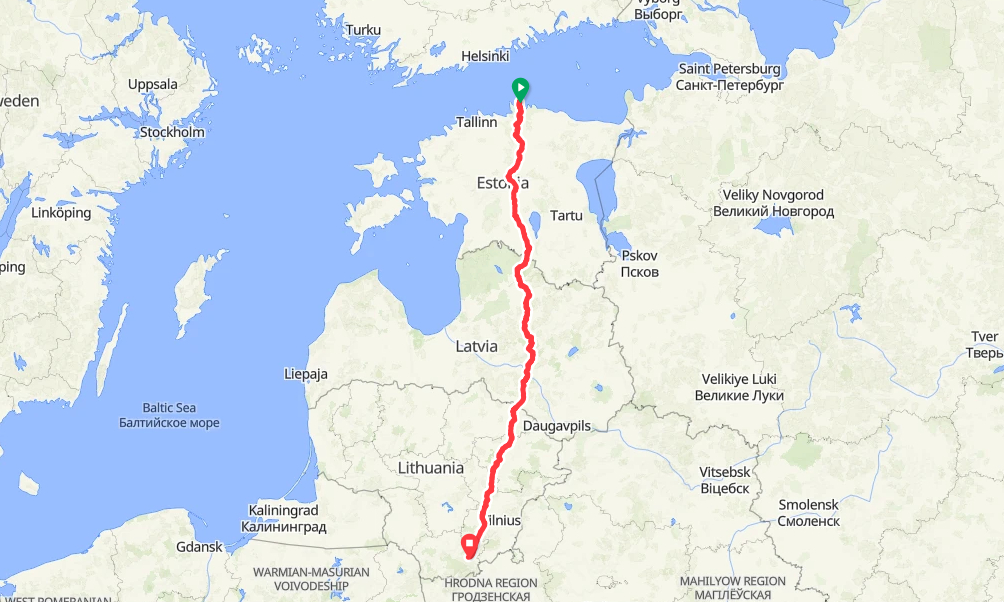
Baltic Divide is a 777 km unsupported bikepacking race. Riders have 48 hours to reach the finish. The route is the same for everyone, with 12 checkpoints that must be ridden past in order.
Every rider was given a disposable film camera with instructions to photograph whatever they liked. Every photo used in this post was taken with that camera.
I came across the event for the first time in spring 2026, but there was little information available about the organiser or the event itself beforehand, so I hesitated for a long time over whether I’d bother taking part. The start was practically in my own backyard, so on the last possible day I decided to put my name on the list anyway.
The organiser provided a transportation to the start and back to Tallinn from the finish for a small fee, but I decided to use a few holiday days and ride to the start and back home myself instead.
Kit and preparation
According to RWGPS the route was just under 60% paved and otherwise looked easy enough that I spent a long time weighing whether to swap the Thunder Burts for the marginally faster 45 mm Hutchinson Caracal Race tyres. Based on past experience I decided to play it safe and go with the 54 mm Thunder Burts anyway.
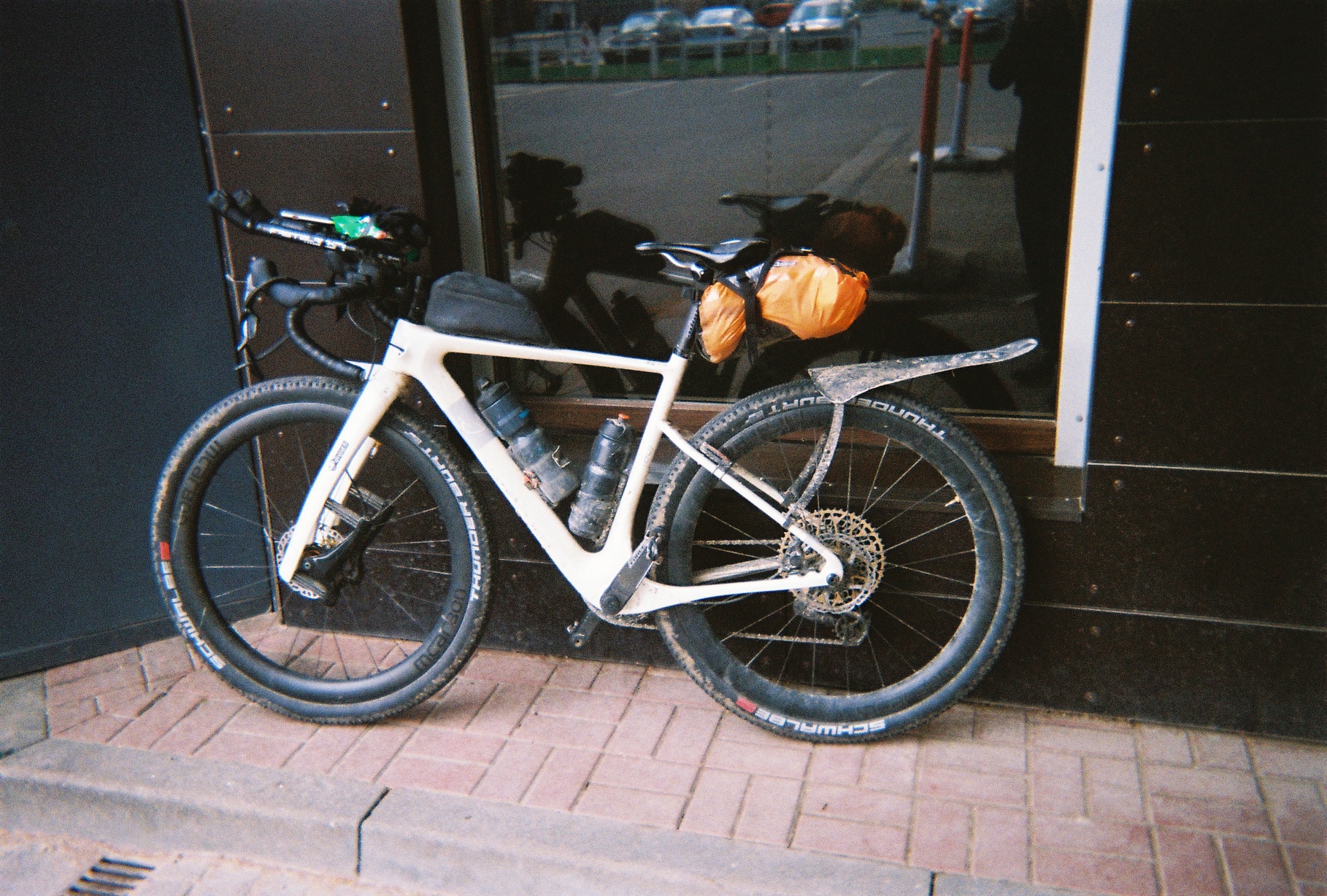
Otherwise the kit was basically the same as always: rain jacket, power bank, charger, and the necessary spares and repair supplies.
I’d calculated in advance that riding the whole route would take a bit over 30 hours, and there were several 24-hour petrol stations along the way at points where I figured I’d be riding through the night, so I didn’t need to stress much about services. I planned in advance to take breaks around 235 km and 535 km and add extra stops on the fly as needed.
Part one
The race started on 18 July at 09:00 from Estonia’s northernmost point, Purekkari Cape. The forecast promised a strong headwind for the entire route and rain overnight.
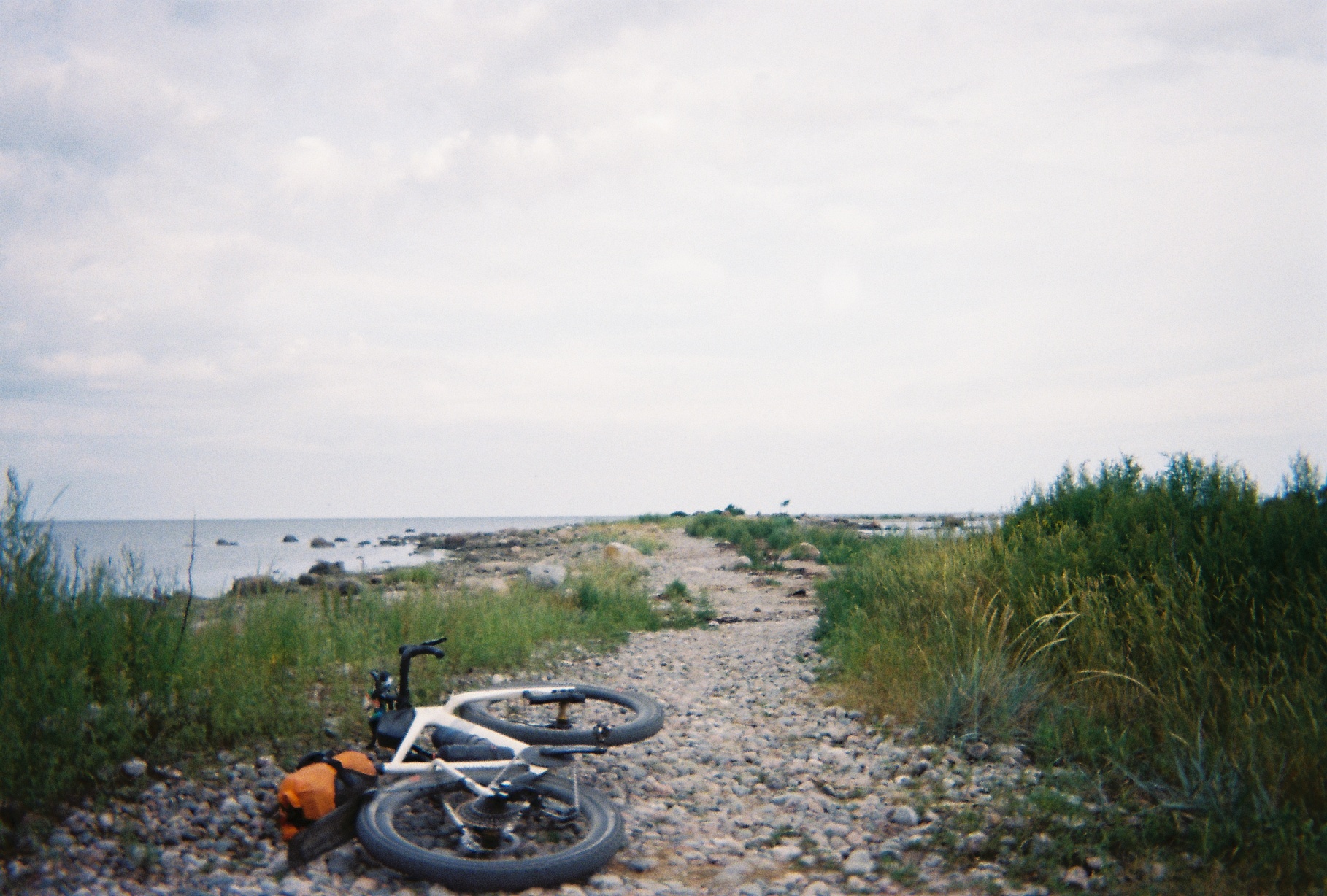
At the second checkpoint, the library in Jäneda at 50 km, there was some kind of event going on and the whole area was fenced off, apparently requiring a 5 € entrance fee. I don’t know if I was early enough to beat the crowds, but I somehow managed to slip into the event area without paying, while other riders had apparently had to buy a ticket just to ride 500 metres through it 😀
The first 250 km was mostly paved road and the pace was noticeably faster than I’d expected beforehand. Despite a fairly strong headwind my average speed was a bit under 30 km/h almost all the way to the Latvian border.
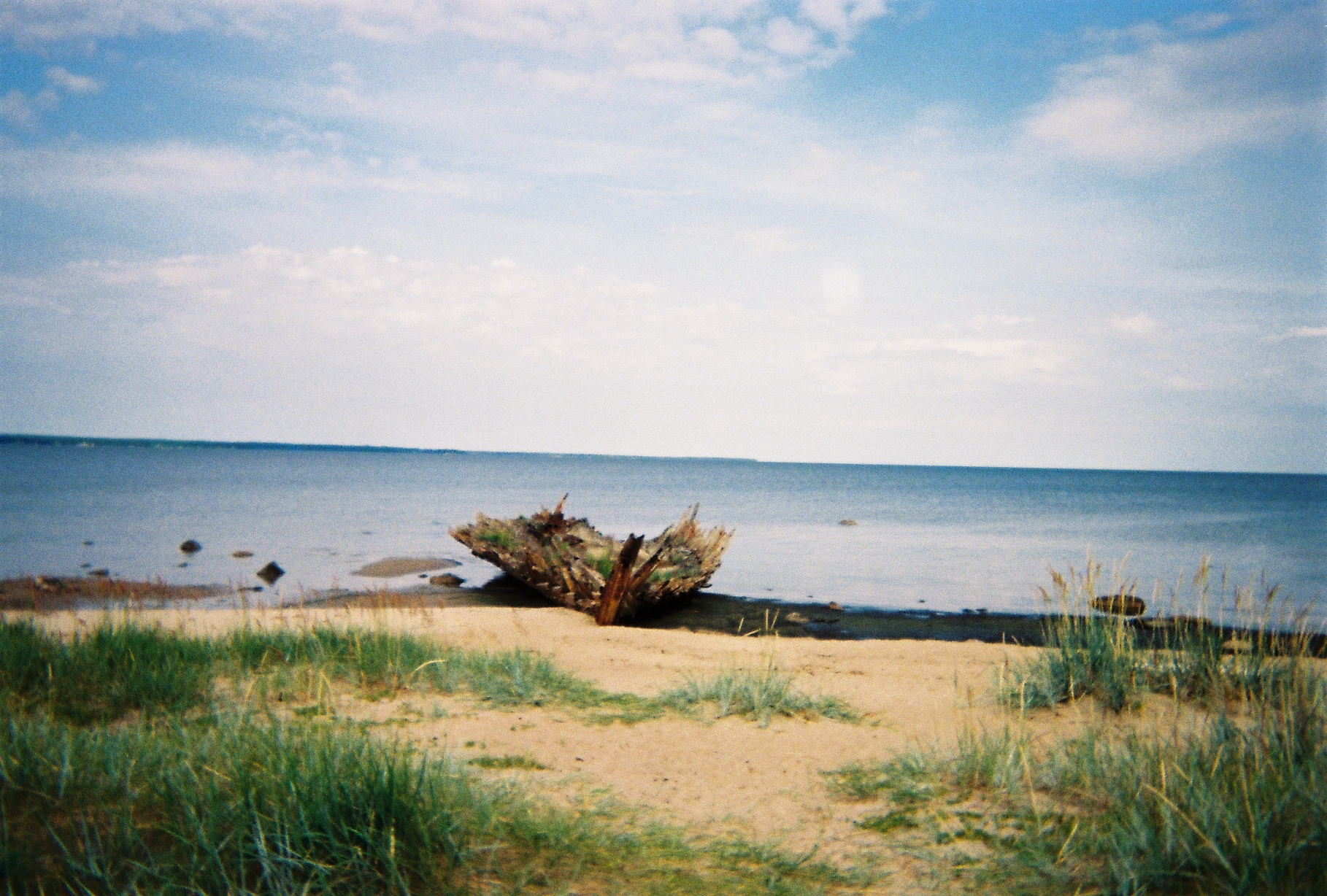
The day got hot enough that I was already running low on water by 180 km. I considered having a food break a bit earlier, but decided to just quickly refill the bottles and save the food break for Tõrva at 235 km, shortly before the Latvian border.
Part two
I took a quick food break in Tõrva, filled the backpack with supplies, and continued towards the Latvian border. Just before the border, a bridge crossing the river on the route had been dug up. Fortunately I made it to the other side with a small detour.
Right after crossing into Latvia the roads turned into wide, rough gravel. The passing cars threw up so much dust that I actually started hoping for the rain promised in the forecast.
Shortly before the Smiltene Stonehenge checkpoint, the route went straight through someone’s yard, where dogs were running loose and a half-naked, drunk man was giggling to himself and shooting the dogs with a water pistol. The smile vanished from his face fast when I rounded into the yard, and he gestured (quite fairly) for me to get lost.
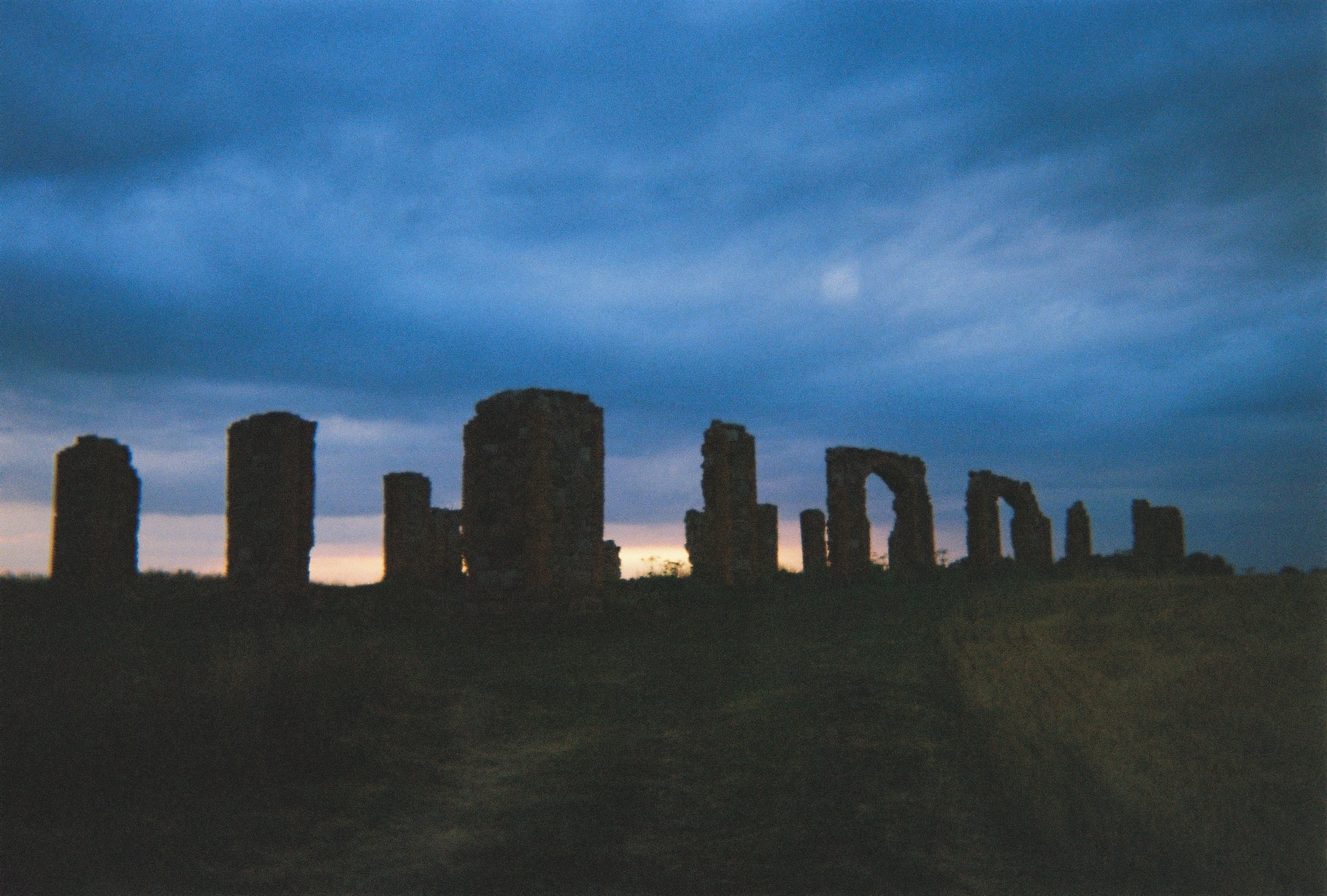
The sky finally opened up as the sun set in Smiltene, and the route turned noticeably hillier at the same time. The downpour turned the roads to mud and progress slowed to a crawl.
Before setting off I’d calculated I’d need light for six hours at most, so instead of the dynamo light I went with the Lupine battery light. For some reason, shortly before the checkpoint at Latvia’s highest point around 400 km, the light started flickering. A little later, descending a bigger hill, it died completely.
I got the light working again briefly, but the same thing kept happening every few minutes. I spent a while in the dark trying to figure out what was wrong with the lamp, but eventually dug the backup Lumonite Compass R headlamp out of my bag. The backup light didn’t have enough output for riding in heavy rain in the dark, which slowed me down even further.
I finally made it to the next 24-hour petrol station around 450 km and, with little success, tried to get the Lupine working again. Sunrise was only a few hours away and I had no interest in pushing on with a useless light, so I took a longer break at the station.
Part three
The rain had stopped during the break and the forecast said it shouldn’t rain anymore, so I put fresh drip wax on the chain and continued.
I made it maybe a kilometre before the sky opened up again. So much for that drip wax 😀
The early morning hours, roughly five to seven, are the worst for me. On top of that came a 30 km dead-straight stretch of paved road directly into the headwind.
Toward morning the rain finally stopped and a few more technical sections came along where I had to concentrate on riding again, and my head started to wake up a little. The drivetrain was making such a horrendous racket that I had to stop and put on fresh drip wax.
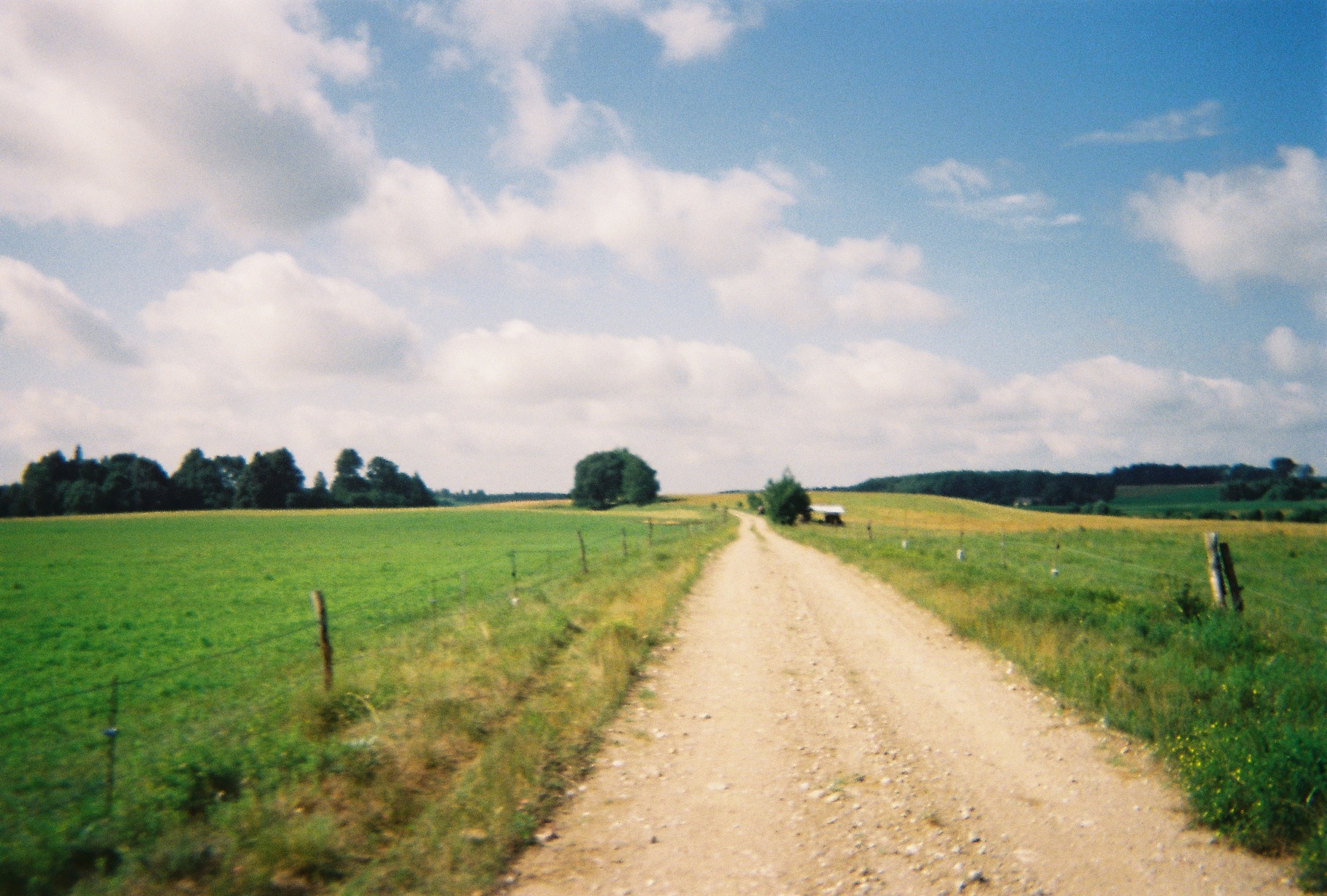
Most of the gravel roads were either loose beach-like sand or as wide as a motorway, with brutal washboard running the full width of the road. The local drivers had also figured out that if you just drive fast enough, your tyres don’t touch the road and you can basically float over it! It’s a horrible feeling when the tyres of a car passing at 120 km/h are flinging rocks at you.
The day warmed up again enough that I decided to take an extra break at 670 km.
The last checkpoint, Trakai Castle, was so packed with people that it took a good fifteen minutes just to push the bike a few hundred metres through the control point area.
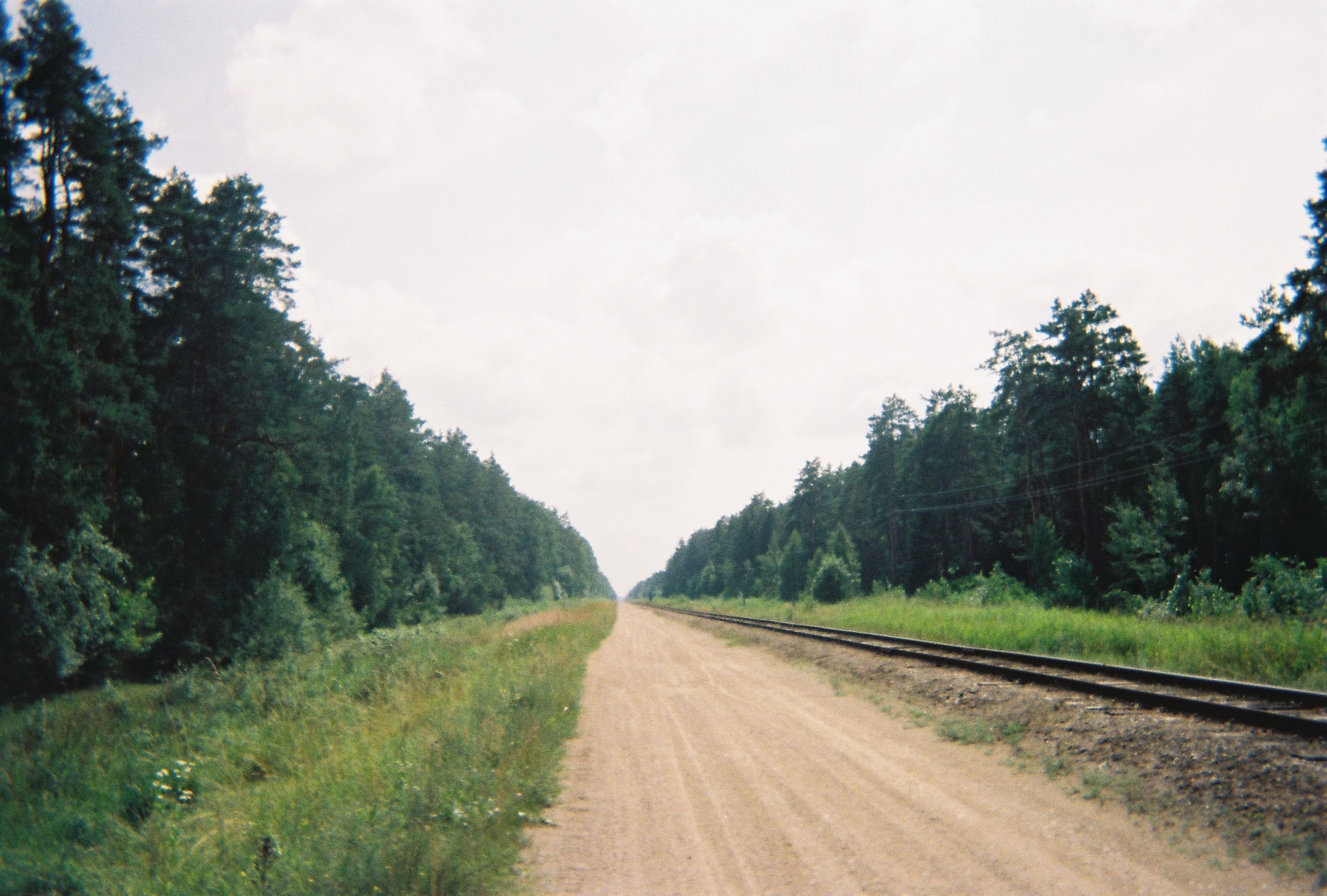
After the last checkpoint the route continued along a railway service road. The start of it was so overgrown that I ended up following the wrong track heading the same direction. That track split off in a different direction after about a kilometre, and next to the railway there was nothing but dense thicket, where the Garmin suggested a path should be. I stood there for a moment wondering if that was really where I was supposed to go. After some hesitation I pushed through the bushes up onto the rail embankment to see if I could spot the route better from there. Right alongside the tracks there turned out to be a wide service road after all.
The tracks looked rough enough that I didn’t realise they were still in use. At some point I started hearing a clattering sound and had to scramble pretty urgently to the other side of the road when I realised a train was coming up behind me.
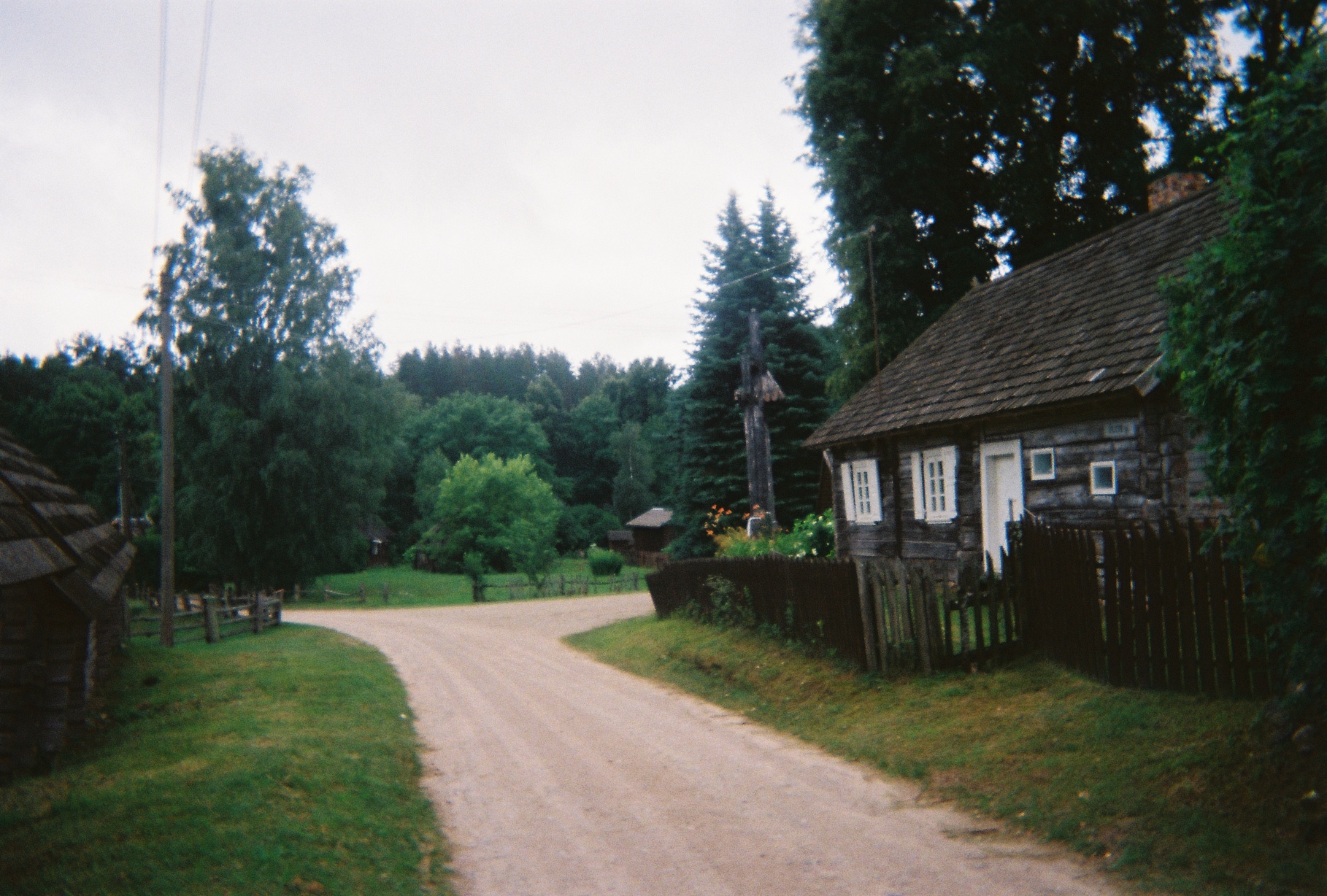
I reached the finish at the train station in Varėna on 19 July at 16:47, in a time of 31 hours and 47 minutes.
Closing thoughts
It was a nice change to ride a somewhat shorter race, a distance you can easily cover without sleeping, instead of spending half the time riding like a zombie due to sleep deprivation.
I didn’t have any expectations going in, but the event surprised me positively in pretty much every way.
The entry fee included a buffet meal the evening before the start, and there was a chance to sleep at the finish after the race.
I was a bit sceptical about the disposable camera at first and wondered whether I’d even bother bringing it along, since I’m really lazy about taking photos while racing. I’m really glad I did, because the photos turned out much better than I expected!
The only downside was a handful of shortcuts left on the route that cut through people’s yards. Luckily I rode the whole thing in first place, so I could just play the dumb tourist, but by the time the fifth rider comes through, just shrugging it off might not fly as easily.